
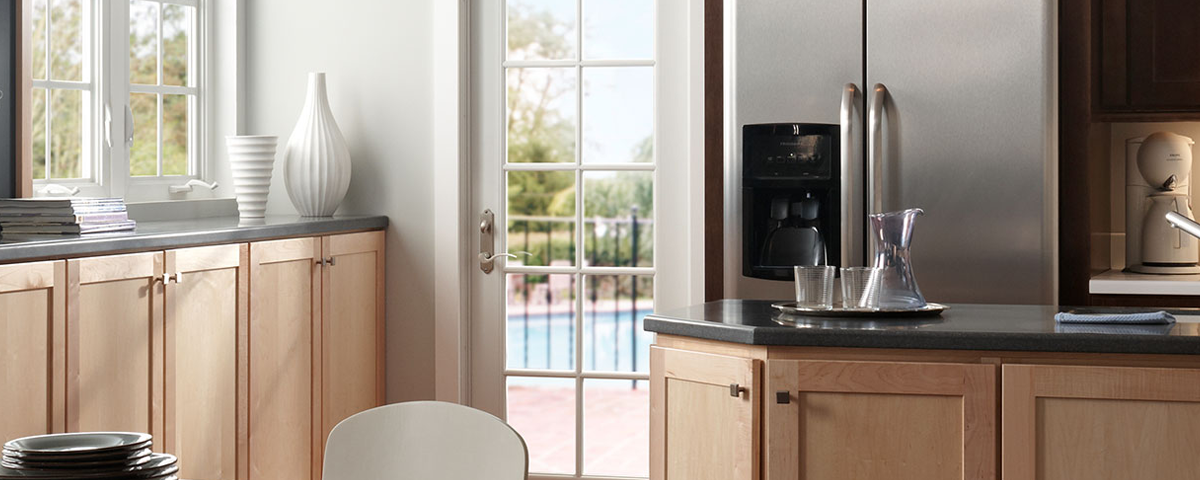
EXTERIOR FRENCH DOORS: KEY TAKEAWAYS
- All Glass & Windows sells and installs impact-rated exterior French doors across the Sarasota area, from Marvin, PGT WinGuard, WinDoor, Kolbe, and Signature.
- On a coastal Florida home, an exterior French door should be impact-rated for your address’s wind zone: laminated impact glass in both panels, a reinforced frame, and approved hardware tested as a system.
- Material follows the look and the opening: aluminum for large modern impact openings, wood or wood-clad for a premium traditional entrance, fiberglass for low-maintenance stability, vinyl for impact protection at a friendlier cost.
- The center meeting rail is the weak point on any French door, so specify a multi-point lock that seals at the top, middle, and bottom to keep out wind-driven rain and hold the energy seal.
- Tell us the opening and how it is used, and we will match the door, glass, and hardware to your home. Visit the Sarasota showroom by appointment or request a measured quote.
Shopping for exterior French doors in the Sarasota area is different from shopping for them almost anywhere else. Our humidity is rough on hardware. Our salt air is rough on finishes. Our building code is strict about what qualifies as hurricane-rated, and most barrier-island HOAs have opinions on outswing configurations. The French door that looks great in a Pella showroom in Ohio may not be the right choice for a home in Casey Key.
This guide covers what we walk homeowners through when they come into the showroom (book an appointment) and ask about exterior French doors. The materials, types, trade-offs, and details that matter in coastal Florida.
What Is a French Door?
A French door is a type of patio door with a glass panel that runs most of its length. Traditional French doors come in pairs, hinged on opposite sides and meeting in the middle, with one or both panels opening like a regular door. They are sometimes called hinged patio doors or French patio doors.
The name comes from 17th-century France, where architects started building tall casement windows that ran down to the floor to let in more natural light. Those windows eventually became doors, and the style stuck. In American homes today, French doors are typically used where a room opens to a patio, lanai, garden, or pool deck.
A few things that make a door a French door, as opposed to another kind of patio door:
- Glass is the main panel material. A French door is mostly a window, with the framing holding it together. Most have decorative grilles that give the impression of smaller panes, though some are single large glass units.
- Hinged operation. Traditional French doors swing open on hinges, either inward or outward. Sliding versions exist, too, and are common in Florida, but the term “French door” most often refers to the hinged style.
- Usually sold in pairs. A single French door exists (more on that below), but the classic configuration is two panels that meet in the middle.
Types of French Doors
If you are comparing French door styles, here are the configurations worth knowing about:
Single-hinged French door. One panel that swings open. Good for smaller openings or rooms with limited wall space. It can be in-swing or out-swing, depending on the layout and clearance. Often called a “single French door,” though purists argue a true French door is always a pair.
Double-hinged French door. The classic configuration. Two panels, hinged on opposite sides, meet in the middle. Both panels can operate, or one can be fixed with the other active (this is called an “active and passive” configuration). Suited for wider openings where you want both the look and the full-width opening when both panels are open.
Sliding French door. Horizontally sliding panels styled to look like a hinged French door, with wider rails and grille patterns typical of the French style. Useful when there is not enough clearance for a swinging door, which is common on Florida patios and lanais, where furniture is tight against the door opening.
Folding French door. Multiple panels connected with hinges that fold back accordion-style when opened. Best for wide openings where you want the full opening visible when the doors are open, like a living room that connects directly to the pool deck.
French door with sidelights. A French door (single or double) flanked by fixed or operable vertical glass panels on either side. Adds width, light, and visual weight to the opening. Common in Florida homes where the builder wanted a more architectural entrance to the lanai.
French door with transom. A French door with a horizontal glass panel above it. Adds height and light. Often used on tall openings or for homes with high ceilings, where the standard door height would look undersized.
Materials for Exterior French Doors in Coastal Homes
Material choice matters more in Florida than in most other markets because of humidity, salt air, and temperature extremes. Here is what we see performing best in the Sarasota area:
Wood French Doors
Wood remains the classic French door material and is still the top choice for homeowners who want a premium traditional look. Marvin’s Ultimate Swinging French Door is a benchmark product in this category. Kolbe also offers strong-wood French doors in the VistaLuxe and Ultra lines.
Pros:
- Warmest, most customizable aesthetic
- Interior stains and paints can match any decor
- Very good thermal performance when properly sealed
- Long history of use in coastal homes
Cons for Florida:
- Requires more maintenance in our humidity than other materials
- Wood can move with moisture, affecting the seal over time
- Usually paired with an aluminum-clad exterior for coastal applications
For coastal homes, most of the wood French doors we install have aluminum-clad exteriors, giving you the wood interior aesthetic with a weather-resistant exterior. All-wood exteriors are uncommon this close to the coast.
Fiberglass French Doors
Fiberglass has become a popular middle-ground choice in Florida. It offers good thermal performance, does not corrode in salt air, does not warp in humidity, and holds paint well.
Pros:
- Dimensionally stable in heat and humidity
- Does not corrode, warp, or rot
- Paintable in any color
- Strong thermal performance
Cons:
- Aesthetic is more contemporary than classic wood
- Premium pricing compared to vinyl
Fiberglass is a frequent recommendation for homeowners who want low maintenance without the appearance limitations of vinyl.
Aluminum French Doors
Aluminum French doors have a distinct use case in Florida: large openings, hurricane impact ratings, and modern architectural homes. WinDoor’s 450 Estate series impact French patio doors are a well-known product in this category, featuring standard stainless steel hardware and a 3-point lock system.
Pros:
- Slimmest sightlines (more glass, less frame)
- Very strong and suited for large openings and impact ratings
- Corrosion-resistant with the right finish
- Clean modern aesthetic
Cons:
- Thermally less efficient than other materials without a thermal break
- Modern aesthetic does not suit all home styles
- Typically premium pricing
For homeowners wanting a modern coastal aesthetic or a large impact-rated opening, aluminum is often the right call.
Vinyl French Doors
Vinyl is the budget-friendly option and performs acceptably in Florida when it’s well-made. PGT’s WinGuard vinyl French doors are a solid choice for homeowners who want impact protection without the price tag of aluminum or wood.
Pros:
- Lower cost than wood, fiberglass, or aluminum
- Good insulating performance
- Handles Florida humidity well
- Available in impact-rated configurations
Cons:
- Aesthetic is more utilitarian than premium options
- Limited color selection compared to fiberglass or wood
- Frame profiles are typically thicker (less glass per opening)
The quality gap between budget vinyl and premium vinyl is significant. The PGT French doors WinGuard line is on the premium end; the performance difference compared to cheap vinyl is real.
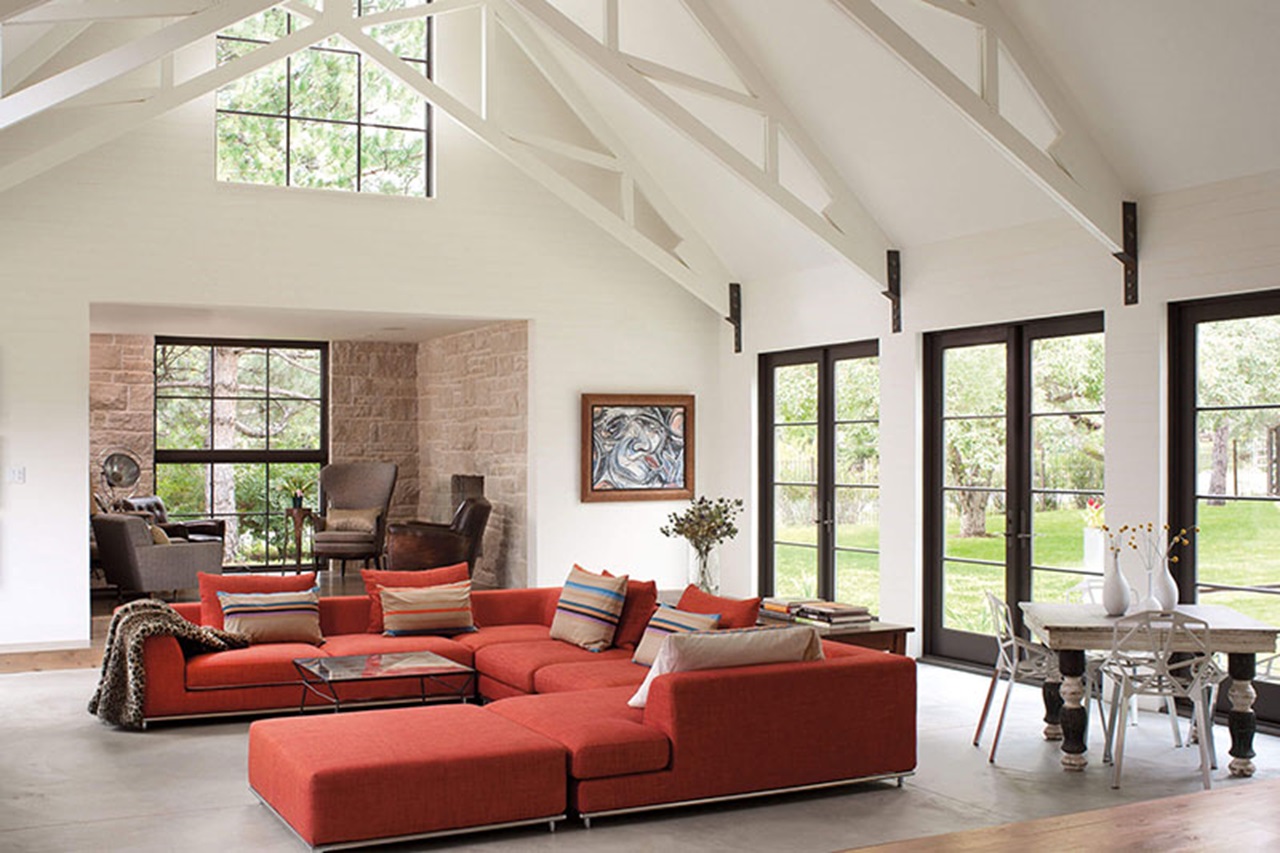
Hardware Options for French Doors
French door hardware is more than cosmetic. On a door with two panels meeting in the middle, the hardware does most of the work, holding the door tight against the frame and keeping the seal intact.
Multi-point locks. On quality French doors, a multi-point lock engages the frame at the top, middle, and bottom of the door when you turn the handle. This matters in Florida for two reasons: security and seal quality. A single-point lock can let a door flex at the top and bottom in high winds, breaking the seal and allowing air or water to enter.
Hinges. Heavy-duty hinges are more important on French doors than on regular doors because of the glass weight. On coastal homes, stainless steel or marine-grade hinges resist salt air corrosion better than standard finishes.
Handles and finishes. Brass, bronze, chrome, matte black, and satin nickel are all valid aesthetic choices. For coastal homes, check the manufacturer’s coastal warranty for specific finishes. Some premium finishes hold up to salt air better than others.
Weatherstripping and thresholds. Not hardware exactly, but worth checking. A French door’s threshold and weatherstripping are where most air and water leaks happen. Quality manufacturers use compression seals that tighten when the door closes rather than brush-style seals that wear out.
Learn more about WinDoor French door options.
Are French Doors Energy Efficient?
Honest answer: They can be, but French doors are inherently harder to make energy efficient than other door types because they have two panels meeting in the middle.
That center seam is the weak point. On a quality French door, a multi-point lock compresses weatherstripping along the full height of the meeting rail, creating a tight seal. On a cheaper French door, the seal depends entirely on a single latch point in the middle, which leaves the top and bottom of the meeting rail loose. In Florida’s humidity and wind, that loose seal is where comfort and cooling bills are lost.
A few things that make a real difference:
- Low-E glass package with argon gas fill reduces heat gain through the large glass panels. For more on how this works, see our guide to Low-E glass for Florida homes.
- Multi-point locks across the meeting rail, not just a single latch point
- Thermally broken frames on aluminum doors, or naturally insulating frames on wood, fiberglass, and vinyl
- Compression-style weatherstripping at the top, bottom, and meeting rail
- Out-swing configurations in windy coastal locations, because wind pressure helps hold them tight against the seal (rather than pushing them open)
For a fuller discussion of how French doors fit into the overall energy strategy in a Florida home, see our energy-efficient windows and doors for Sarasota homes page. French doors are part of a larger picture that includes the glass package, installation quality, and whole-home exposure considerations.
Hurricane and Impact Considerations for Florida
In most of the Sarasota area, exterior French doors need to meet Florida Building Code requirements for wind pressure and, in many locations, windborne debris impact. That usually means:
- Impact-rated laminated glass in both panels
- Reinforced frames engineered to withstand design pressure loads
- Approved hardware configurations and the rating applies to the whole system, including the hinges and locks, as tested
- Proper installation with flashing, anchors, and sealant per the product’s Florida Product Approval documentation
Not every French door is impact-rated. If hurricane protection is a project goal, confirm that the specific product and configuration have the required approvals for your location’s wind zone. For a detailed breakdown, see our impact windows solutions page and hurricane windows page.
Screens, Blinds, and Shades
A common question on French doors: where do the screens go?
Hinged door screens. In-swing French doors can accept hinged screen doors that swing separately. Out-swing French doors cannot use hinged screens on the exterior without a complicated arrangement.
Retractable screens. The most common solution for French doors in Florida. A screen stored inside the door frame that you pull out when you want the screen engaged, and that retracts when you close the door. Clean aesthetic, does not interfere with the door’s operation.
Sliding French doors with track screens. If the French door is a sliding type, screens run on a parallel track like a regular slider.
For privacy and light control, several manufacturers offer built-in blinds between the glass panes. These blinds stay clean (protected inside the insulated glass unit), operate with a discrete handle or slider, and do not interfere with the door’s operation. Worth considering for doors where curtains or blinds would be inconvenient.
French Doors with Sidelights and Transoms
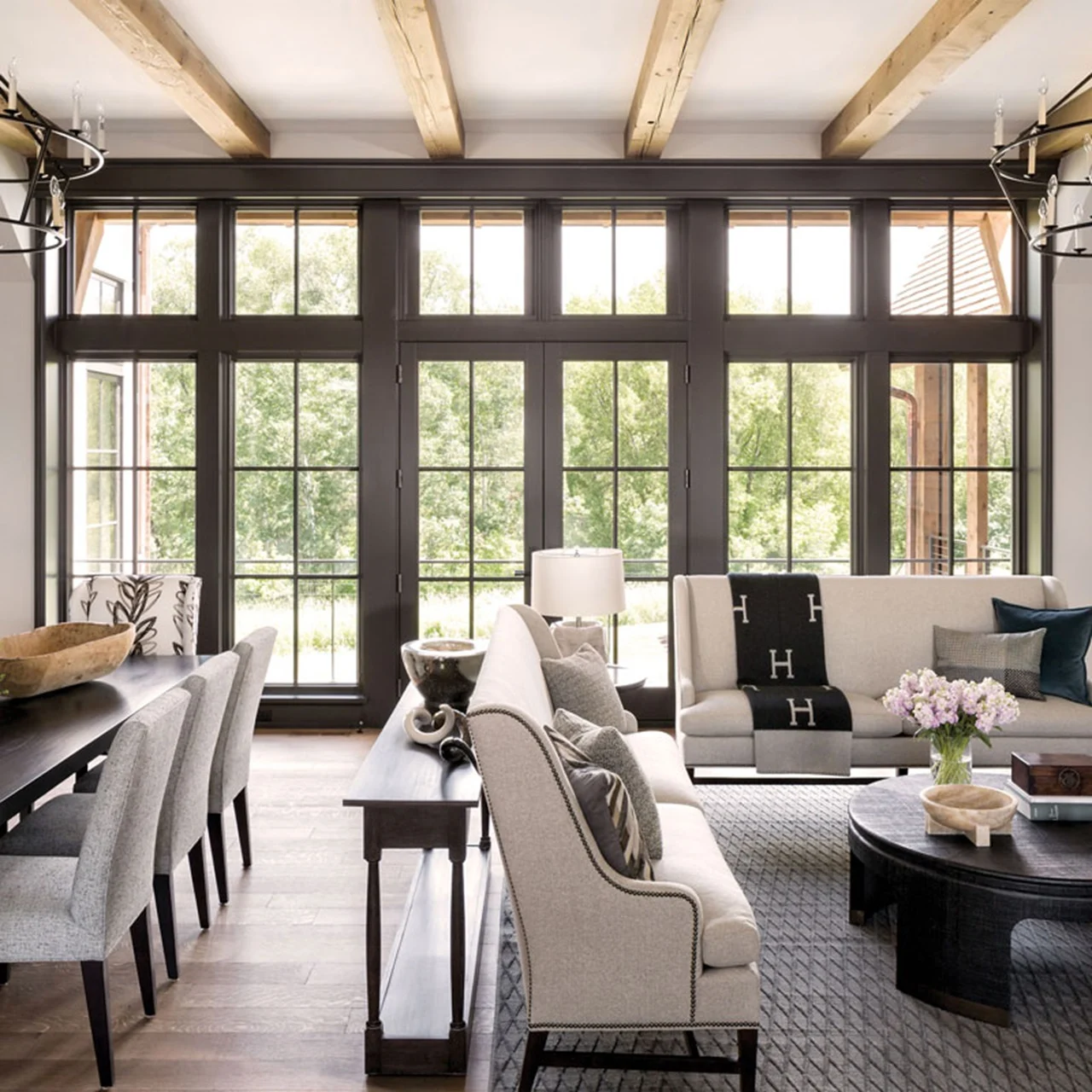
Sidelights are vertical glass panels flanking the door. Transoms are horizontal glass panels above it. Both add architectural weight to a French door opening and let in more natural light.
Some sidelights are fixed glass, some operate as venting windows. Signature Door Inc. offers sidelights that open for ventilation, a useful option for Florida lanai applications where you want light without always needing the full door open.
In tall coastal homes with high ceilings, transoms bring the proportions of the doorway into line with the room. Without a transom, a standard-height French door in a ten-foot ceiling can look undersized.
Pros and Cons of French Doors
Pros:
- Large glass area creates an indoor-outdoor connection and floods the room with natural light
- Classic aesthetic that fits both traditional and contemporary homes, depending on the material and hardware
- Wide opening when both panels are open. This is good for entertaining or moving furniture
- Available in impact-rated configurations for Florida coastal homes
- Many customization options: materials, hardware, grille profiles, finishes, glass packages
Cons:
- The center meeting rail is a potential weak point for air and water infiltration if the seal is not quality
- Hinged French doors need clearance space, which can limit furniture placement near the door
- More moving parts than a standard door, which means more maintenance over time
- Cleaning the multiple glass panels takes more time than a single large slider
- Premium products are typically more expensive than equivalent sliding patio doors
None of these cons disqualify French doors; they just mean the installation, hardware, and product line choice matter more than with a simpler door type.
Choosing Between French Doors and Sliding Glass Doors
This is one of the most common questions we get. A few factors that help decide:
Choose French doors when:
- You want a traditional aesthetic
- The room has space for the door to swing
- You want both panels to open fully (for entertaining, indoor-outdoor flow)
- The architectural style of the home calls for a hinged door
Choose sliding glass doors when:
- You are tight on interior clearance for a swinging panel
- The opening is very wide (three or four panels of sliding glass)
- You want the simplest possible operation
- The home aesthetic leans modern or coastal contemporary
Choose a sliding French door when:
- You want the French door look, but cannot accommodate the swing
- The opening is wide, but the room cannot accommodate the clearance of multi-panel hinges
- You want a larger glass area than a traditional sliding glass door
There is no single right answer. The right door depends on the home, the opening, and how the room gets used.
Frequently Asked Questions About French Doors
A French door is a type of patio door with large glass panels and a hinged or sliding operation. Traditional French doors come in pairs, with both panels opening outward or inward like regular doors. They are sometimes called hinged patio doors. The style originated in 17th-century France as tall casement windows designed to bring natural light into rooms.
It depends on the home and the budget. For coastal Florida homes, aluminum-clad wood offers the best combination of interior aesthetics and exterior weather resistance. Fiberglass is a strong middle-ground option. Aluminum is best for modern homes and large impact-rated openings. Vinyl is the budget-friendly option and performs well in Florida when sourced from a quality manufacturer.
They can be, but French doors are inherently harder to seal than single-panel doors because they have two panels meeting in the middle. Energy performance depends on the glass package, the hardware (particularly multi-point locks), the frame material, and the quality of installation. A premium French door with Low-E glass, argon gas fill, and a proper multi-point lock performs well. A budget door with a single latch point typically does not.
Modern French doors can be. A quality French door uses a multi-point locking system that engages the frame at the top, middle, and bottom when the handle is turned. This is significantly stronger than a single-point lock. Combined with impact-rated laminated glass, a well-installed French door is comparable in security to other exterior doors.
A single French door is sometimes just called a single French door, though some manufacturers refer to it as a hinged patio door or a single-hinged patio door. It is essentially one panel of what would otherwise be a pair, often paired with a fixed sidelight to give the visual impression of a double door.
Both configurations are common in Florida. Out-swing doors are often preferred in coastal homes because wind pressure helps hold them closed against the seal. In-swing doors can be more convenient on a covered lanai where rain is less of a factor, and they do not conflict with outdoor furniture or landscaping placed near the door. HOA rules in some barrier island communities specify one or the other, so check before ordering.
Yes. Multiple manufacturers offer impact-rated French doors that meet Florida Building Code requirements for wind pressure and windborne debris. These use laminated glass, reinforced frames, and tested hardware configurations. If hurricane protection is a project goal, confirm the specific product carries Florida Product Approval for your location and opening size.
Cost depends on size, material, glass package, impact rating, hardware, and installation complexity. We do not quote specific pricing publicly because the variables affect the number too much to be useful in print. Request a measurement-based estimate for accurate project numbers.
Yes. We work with builders, architects, and designers on both replacement and new construction projects. French doors are a common specification for custom homes and renovations in the Sarasota area.
Quality French doors from established manufacturers typically last twenty years or more with proper maintenance. The insulating glass seal, the hardware, and the weatherstripping are the components most likely to need attention over time. The door panels and frames themselves, when chosen in the right material for a coastal environment, can last the life of the home.
Brands We Install Most Often for French Doors
In the Sarasota area, the manufacturers we install most often for French door projects include:
- Marvin — Ultimate and Elevate lines offer classic and contemporary French door options with strong thermal performance.
- PGT — WinGuard vinyl French doors for impact-rated projects at a more accessible price point.
- WinDoor — 450 Estate series aluminum French doors for large impact-rated openings and modern coastal homes.
- Kolbe — Premium wood and wood-clad French doors with extensive customization.
- Signature — Custom configurations including operable sidelights.
The right brand depends on the project. Part of what we do is walk through the trade-offs without pushing one brand.
Planning French doors as part of a whole-home project If you are replacing windows and other doors at the same time, it is worth planning the French doors as part of one coordinated impact project rather than a standalone swap. Doing the openings together keeps the impact rating, the hardware, the finishes, and the permitting consistent across the house, and it runs as one project instead of several. See our exterior and entry doors page for the full door lineup, and our Sarasota window replacement guide for how a whole-home replacement comes together.
Ready to Explore French Door Options?
If you are planning a French door project in the Sarasota area, whether replacement or new construction, we can walk through the opening conditions, product options, and trade-offs that apply to your specific home.
For a measurement-based estimate, request a quote or call us at 941-379-9555.